 INDUSTRIAL




Flexible packaging
Replacing TTO with UV Laser on Flexible Packaging Film
A sampling and acceptance guide for comparing thermal transfer overprinting with UV laser marking on the same packaging film, from the first samples to line trials.
Discuss a trial Purchasing checklist
On this page
- Keep TTO, run a single-line trial, or compare retrofit options?
- What flexible-packaging codes need to do
- Why evaluate UV laser marking?
- What the retrofit must accommodate
- Which lines are worth evaluating first?
- When keeping TTO may make sense
- Where the Lugsicher LT Series fits
- Purchasing and acceptance checklist
- Decision after the trial
Can UV laser marking replace thermal transfer overprinting (TTO) on flexible packaging film? Start with samples from the film that actually runs on the line. Confirm readability and check the film layers, then trial the code at the packaging machine's target speed with its normal triggering, starts and stops. Agree on acceptance criteria for code quality, package function and station integration before approving the retrofit.
For pharmaceutical packaging, mark the intended window for the lot number, expiry date or 2D code and record its distance from the heat-seal edge. Keep samples from the existing TTO station as a baseline and use the same evaluation conditions for both methods.
Keep TTO, run a single-line trial, or compare retrofit options?
Use the production film, the full code template, the current operating conditions and TTO records to set a common baseline. If the samples meet code and packaging requirements, review station dimensions, guarding, fume extraction and synchronization. Include the whole system when comparing operating cost.
| Next step | What to confirm | What to have on hand |
|---|---|---|
| Keep or optimize TTO | Current process issues, maintenance and cost assumptions | Operating logs and ribbon change records |
| Run a single-line laser trial | Film compatibility, code window and package function | Sample film, code file and actual line conditions |
| Compare retrofit options | Trial results, space, interfaces and acceptance criteria | Test records, station drawings and responsibilities |
A static sample shows how a code looks on that piece of film. A moving-web trial shows how it behaves at speed, and site acceptance covers the conditions agreed for production. Keep untested material lots, dense code templates, multiple-lane jobs and reel changes on the trial checklist.
View the LT Series UV laser marking system · See food packaging film applications · Go to the purchasing checklist
1. What flexible-packaging codes need to do
Dates, lot numbers and 2D codes support production records, traceability and quality control. Define what the code must contain, how long it must remain readable and what happens if it fails inspection. Record the reading conditions and check whether the marking station must exchange data with the PLC, MES or traceability system.
2. Why evaluate UV laser marking?
Ribbon handling and maintenance
For lines running across shifts, ribbon purchasing, storage, changeovers and downtime can add up. UV laser marking removes ribbon and ink from the marking process. Include optics maintenance, extraction filters, energy and maintenance downtime in the comparison.
Code readability and durability
Laser marking changes the material surface without contact. Test readability and durability on the actual film after heat sealing and under the expected abrasion, storage and transport conditions.
Traceability and repeatable production
Where the project calls for PLC, MES or vision integration, define how code content is sent, how the mark is verified and how exceptions are recorded. For a rollout across lines or plants, document template versions, process settings, interfaces and the checks each line will repeat.
3. What the retrofit must accommodate
Film construction and the marking window
PET, BOPP, PE, PP, metallized films, foil laminates and coated papers can respond differently. The layer stack, print or coating, code position and process settings affect both contrast and the condition of the film. Look for holes, distortion, delamination or coating loss. For pharmaceutical packs, agree with the packaging quality team on relevant seal-strength, package integrity or barrier tests.
Compare TTO and UV laser using film from the same lot and the same date, lot number or 2D code. Record the layers from outside to inside, total thickness, printed or coated surface, code location and distance from the heat seal. Keep both sets of samples and the original results.

Timing and registration
On horizontal flow wrappers, stick-pack lines and vertical packaging machines, verify repeat length, the marking window, trigger timing and response at actual line speed. Synchronization problems can cause position drift, stretched characters or missed codes even when a static sample looks clear.
Space and interfaces
Measure the existing TTO station and the clearance for the laser head, optics, mounting, guarding and extraction. Confirm whether the proposed field size and working distance fit the available space. Discuss sensor signals, encoder input, machine permissives and interlocks with the integrator.
4. Which lines are worth evaluating first?
- Food, pharmaceutical, personal care or industrial packaging lines where codes need to remain readable and link to production records.
- Long-running or multi-shift lines where ribbon changes and related downtime affect output.
- Lines due for an upgrade or replication across sites, especially when common code templates or MES integration are part of the project.
- Products with documented durability or readability criteria that can be checked with real samples.
5. When keeping TTO may make sense
A stable TTO process with manageable maintenance and consumable costs may be worth keeping. For lines with frequent material changes, establish controls for incoming film before drawing conclusions from a laser trial. If guarding, extraction or inspection cannot fit at the proposed station, review the layout before committing to a retrofit.
6. Where the Lugsicher LT Series fits
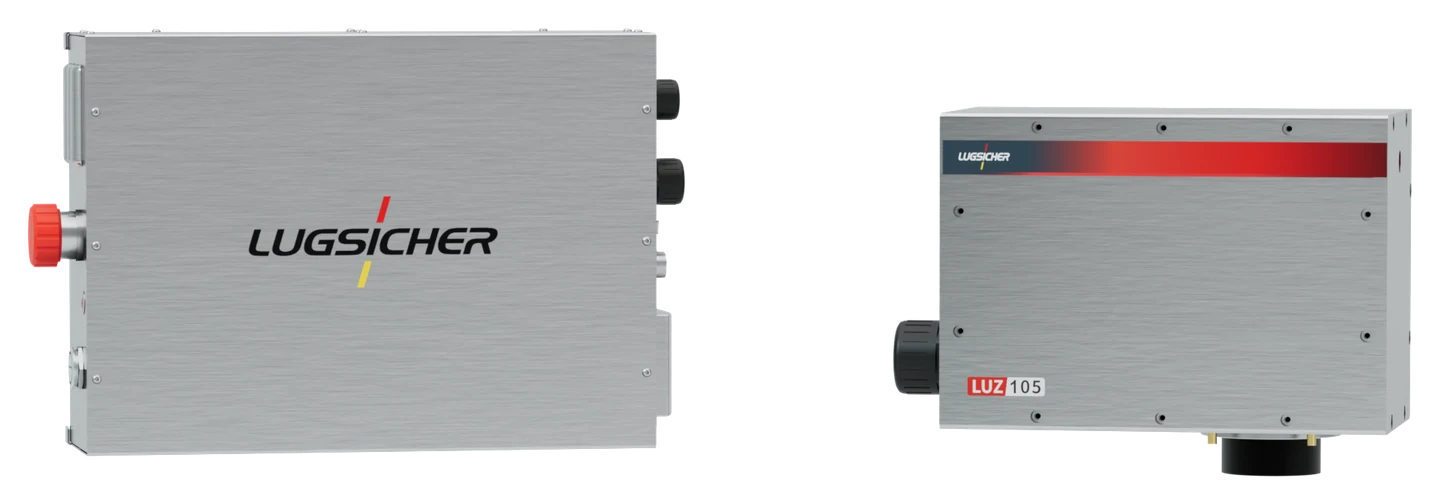
The LT Series is a candidate for roll-fed film marking on suitable packaging lines. Bring the actual film, code content, line speed, station dimensions and interface requirements to the selection discussion. Confirm the proposed model, mounting and PLC, MES or vision interfaces against the project documentation.
7. Purchasing and acceptance checklist
- Submit production film. Record film structure, total thickness, color, code location, supplier and lot, plus relevant heat-seal, abrasion, cleaning and transport conditions. Check readability and unwanted material changes.
- Specify the code and line conditions. Provide the date, lot number, line count, smallest characters and full 2D code payload. Record current and target speed, continuous or intermittent motion, pitch, marking window and trigger.
- Define the work included in the quotation. State which brackets, sensors, encoders, extraction, safety interlocks, commissioning and training are included. Identify who owns content delivery, verification, results and recovery from communication faults.
- Compare full-system operating cost. For TTO, record ribbons, printheads, changeovers, maintenance and rework. For UV laser, record equipment and integration, optics maintenance, extraction filters, energy and maintenance downtime. Estimate payback once operating and trial records are available.
- Agree on the acceptance plan. Record the lot, code template, line speed, continuous run length, inspection frequency and pass criteria. Include starts, stops and reel changes. Record code position, missed or repeated marks, successful reads and film condition. Test vision verification, rejects and reporting if included in scope.
Same-lot comparison record for TTO and UV laser
Keep a separate record for each method. Use the same reader and pass criteria. Agree on package performance tests with the quality team and mark pending checks “Not tested”.
| Check | What to record |
|---|---|
| Film and code samples | Layer stack, thickness, incoming lot, coating, code template, code position and sample IDs for both methods. |
| Operating conditions | Actual line speed, continuous run length, starts and stops, reel changes and material changeovers. |
| Marking and reading | Passed and inspected counts before and after sealing, plus deviations in code position, skipped codes and repeat marks. |
| Package function | Distortion, holes or delamination in the marked region, plus seal strength, package integrity or barrier performance where applicable. |
Decision after the trial
Begin with the actual film and a shared acceptance plan. Use the line trial to establish whether the code, packaging and station meet the agreed requirements. Then decide whether to retain TTO, extend the pilot or proceed with the retrofit.
Discuss your application with Lugsicher
Send sample film, the production code and your line speed. Station dimensions, a photo of the existing position and TTO operating records help define the trial.
Request a film and station assessment