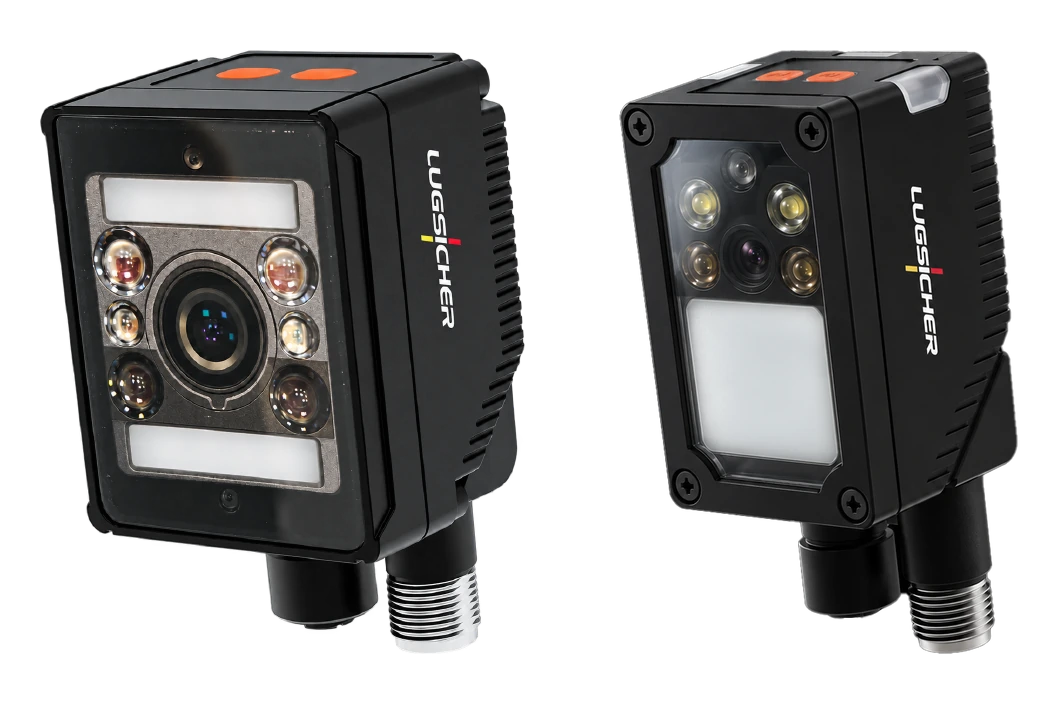
Combine image acquisition, lighting and inspection algorithms in one sensor. Check presence, read codes or verify printed dates and batches at a production-line station.
Compact station integrationImaging, lighting and inspection algorithms are integrated into one sensor for space-constrained stations.
Check presence, appearance and codesInspect presence, outlines or counts, and read text, linear barcodes and 2D codes.
What can the sensor check?
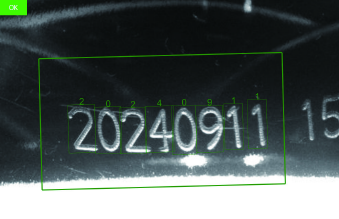
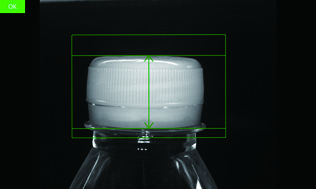
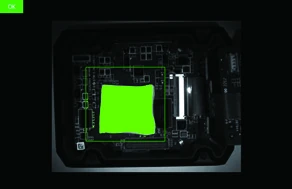
Use template positioning to locate the region of interest. Check presence, count features, measure width, compare contours or analyze grayscale. Color versions also support color recognition.
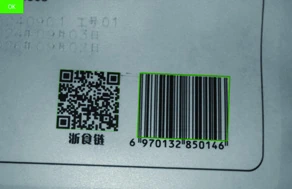
Read 1D barcodes, 2D codes and printed characters. For appearance sorting, register sample features for AI classification and combine the checks with conditional logic and arithmetic.
Brochure example of date and batch verification using OCRBrochure example of checking bottle-cap position using edge and width featuresBrochure example of reading a 1D barcode and a 2D code on the same sampleBrochure example of checking whether a component is present in an assembly
Start with the available camera distance, the required field of view and the smallest feature to inspect. Check that the selected lens covers the target throughout its travel and resolves the feature clearly. Use production samples to compare lighting options on reflective surfaces and validate the result at line speed.
Global shutter · M10 · autofocus with green aiming indicator
Power supply / consumption
9–26 VDC, 1.5 A · <14 W
16–26 V, 1 A · <6 W including built-in lighting
Protection rating / net weight
IP65 · <180 g
IP67 · <160 g
Housing dimensions*
47 × 58 × 38 mm
57 × 37 × 39 mm
* Housing dimensions exclude connectors. Ratings and maximum frame rates are brochure specifications. Verify lighting, field of view and cycle time with production samples and actual installation conditions.
Series 4: 9 configurations and field of view
Model
Focal length
Field of view (mm) at 150 mm
LUG-CVS4130C-07-WG
7 mm
116 × 92
LUG-CVS4130C-07-WN
7 mm
116 × 92
LUG-CVS4130C-12-WG
12 mm
64 × 51
LUG-CVS4130C-12-WN
12 mm
64 × 51
LUG-CVS4130G-07-RG
7 mm
116 × 92
LUG-CVS4130G-07-WG
7 mm
116 × 92
LUG-CVS4130G-12-RG
12 mm
64 × 51
LUG-CVS4130G-12-WG
12 mm
64 × 51
LUG-CVS4130G-12-WN
12 mm
64 × 51
Series 5: 10 configurations and field of view
Model
Focal length
Field of view (mm) across the listed working distance
LUG-CVS5160G-05-RG
5 mm
17 × 13 to 1198 × 898
LUG-CVS5160G-05-WG
5 mm
17 × 13 to 1198 × 898
LUG-CVS5160G-12-RG
12 mm
12 × 9 to 516 × 387
LUG-CVS5160G-12-WG
12 mm
12 × 9 to 516 × 387
LUG-CVS5500C-05-WG
5 mm
32 × 24 to 2157 × 1617
LUG-CVS5500C-12-WG
12 mm
21 × 16 to 929 × 697
LUG-CVS5500G-05-RG
5 mm
32 × 24 to 2157 × 1617
LUG-CVS5500G-05-WG
5 mm
32 × 24 to 2157 × 1617
LUG-CVS5500G-12-RG
12 mm
21 × 16 to 929 × 697
LUG-CVS5500G-12-WG
12 mm
21 × 16 to 929 × 697
Lighting codes: WG uses white polarized, non-polarized and diffuse light. WN uses white diffuse light and two non-polarized channels. RG uses red polarized and non-polarized light, with red diffuse light on Series 4 and white diffuse light on Series 5.
Configure the sensor and connect it to the line
Web configuration and recipe switching
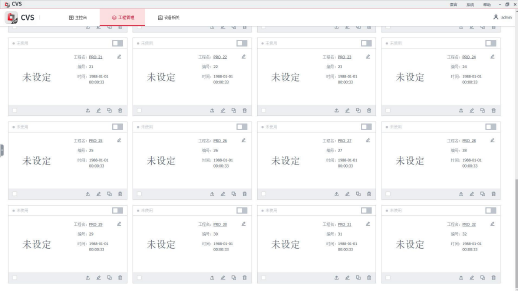
Adjust images, register reference images, configure algorithms and set communication outputs in a browser. Store up to 32 recipes and monitor up to 16 devices online at once. View and export images for troubleshooting.
I/O and industrial communication
Two M12 connectors for Ethernet and GPIO. 100 Mbps Ethernet, RS-232, two isolated inputs and three isolated outputs. Protocols include TCP client/server, UDP, FTP, RS-232, PROFINET, Modbus TCP and EtherNet/IP.
Review inspection images in the browser
Save the settings as a recipe for each product format. After a changeover, confirm the active recipe, the inspection region and the result signals with sample parts. Review images when troubleshooting a failed check.
Browser monitoring interface shown in the brochure (Chinese)
Series 5 supports internal and external triggers, as well as network, serial and industrial Ethernet triggers. Confirm the timing from trigger to acquisition, decision and output, then validate any alarm, reject mechanism or PLC linkage on the line.
Operating temperature −20 °C to +50 °C. Storage temperature −30 °C to +70 °C. Relative humidity 20–95%, non-condensing.
Send samples for a vision inspection assessment
Share representative good and defective samples, the smallest feature to check, installation distance, line speed and the signals that the station needs to exchange.
 INDUSTRIAL